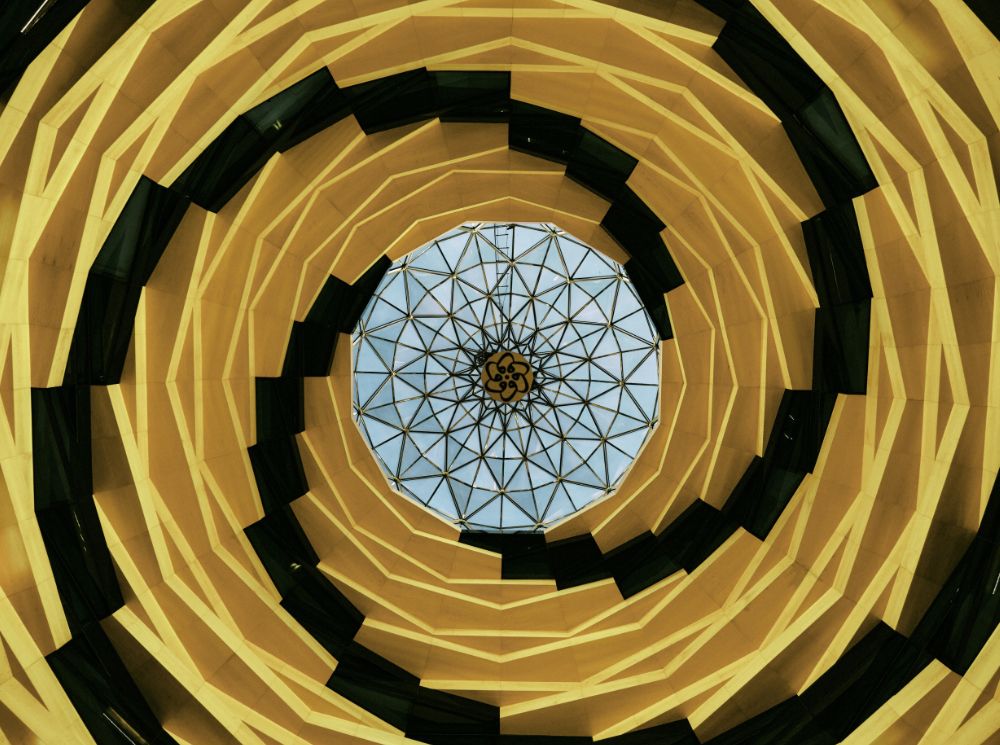
The University of Cambridge used NEC3 ECC Option A to transform the former Arup Building on its New Museums site - one of the worst-performing buildings in its estate, with no insulation, single glazing and numerous cold bridges - into an award-winning global centre for conservation and biodiversity, retaining over 82% of the original building's embodied carbon by keeping demolition to a minimum. Opened by Sir David Attenborough in April 2016, the refurbished building houses the Museum of Zoology and the new Cambridge Conservation Campus. It is the latest in a long sequence of NEC-procured capital projects at the university stretching back to 2005.
From worst performer to global conservation centre
The former Arup Building, completed in 1971, occupied a prominent position on the New Museums site in central Cambridge but had become one of the worst-performing properties in the university's estate. Nicholas Hare Architects' creative redesign transformed the brutalist five-storey structure into a building fit for its new purpose as the home of the Museum of Zoology and the Cambridge Conservation Campus - the latter created by the Cambridge Conservation Initiative, a collaboration between the university and leading international biodiversity conservation organisations. The refurbishment provided a new entrance hall, exhibition and storage facilities for the museum, and a new entrance, collaborative hub and four-storey atrium with a living green wall for the campus. Insulation and double-glazing were installed throughout, together with combined heat and power, rooftop photovoltaics and passive ventilation systems. Structural engineering, project and cost management was by Aecom; mechanical, electrical and fire engineering design by Buro Happold.
Kier Construction was engaged under an NEC3 ECC Option A in November 2013. The decision to refurbish rather than rebuild was central to the building's sustainability credentials: by limiting demolition to the minimum necessary, the project retained over 82% of the original structure's embodied carbon dioxide - a significant whole-life carbon saving that a new-build replacement could not have achieved.
NEC at Cambridge: a track record going back to 2005
The University of Cambridge is an established and experienced NEC user across its academic property portfolio. The David Attenborough Building follows two significant earlier NEC ECC Option A projects at the university: the £4.6 million Plant Growth Facility in the Botanic Gardens completed in 2005, and the £82 million, 11,000 m2 Sainsbury Laboratory completed in 2011, which won the RIBA Stirling Prize. Aecom project manager Matt McBrien says the NEC contract worked well for the David Attenborough Building - as it has consistently done for Cambridge - delivering the complex project within budget and in a controlled manner.
McBrien says all members of the project team fully embraced NEC's collaborative philosophy, which was put to effective use on a complex refurbishment with multiple unknowns. The NEC early warning process enabled the parties to surface and discuss emerging risks openly, finding practical solutions at the earliest possible point rather than allowing issues to compound. Timely agreement of all change implications gave the university continuous real-time understanding of its budget position throughout the programme. McBrien concludes that NEC provided a robust procedure for contract control throughout, with a full audit trail of all decisions and communications.
All members of the David Attenborough Building project team bought into the NEC philosophy of close collaborative working to deliver this complex and sophisticated refurbishment scheme. The NEC early warning process to notify the other party of emerging risks or issues proved to be particularly useful. It enabled the parties to discuss issues openly and to determine the most practical solutions at the earliest opportunity
Matt McBrien, MRICS Regional Director, Science Sector Lead, Project Management, Aecom
Benefits of using NEC
- NEC3 ECC Option A provided the University of Cambridge with a familiar, well-understood contract framework consistent with its NEC track record across capital projects since 2005, reducing procurement risk and maintaining a shared contractual language across its supply chain.
- NEC's early warning process enabled complex refurbishment risks to be surfaced, discussed and resolved promptly - essential on a project where the existing structure's condition could not be fully known until demolition revealed what lay within.
- Timely NEC compensation event management gave the university continuous, real-time visibility of its budget position throughout a challenging 26-month refurbishment programme - providing the financial control that a fixed project budget on a complex heritage building demands.
- The NEC spirit of mutual trust and co-operation provided the cultural framework for a highly skilled multidisciplinary team - Aecom, Buro Happold, Kier and Nicholas Hare Architects - to work collaboratively through the inherent complexity of transforming a 1970s brutalist building into a 21st-century sustainable research and museum facility.
Photograph courtesy of Alan Williams Photography
- Contact
- Matt McBrien, MRICS Regional Director, Science Sector Lead, Project Management Tel: +44 1223 486062
- matthew.mcbrien@aecom.com
- Web
- https://www.aecom.com
- Share this page
-


- Copy link