A partnership of the Environment Agency, South Gloucestershire Council and Bristol City Council has used NEC3 Engineering and Construction Contract (ECC) Option C (target contract with activity schedule) to deliver 17 km of improved flood defences along the east bank of the Severn Estuary on time and below the target cost. The £100 million scheme, completed in June 2025, has reduced flood risk to 2,500 homes and businesses, created 80 ha of new wetland habitat and helped to unlock 12,000 new jobs and £3.9 billion of economic growth in the Avonmouth Severnside Enterprise Area, demonstrating how a collaborative NEC target contract can deliver complex, multi-benefit environmental infrastructure.
A complex, multi-worksite scheme on the Severn Estuary
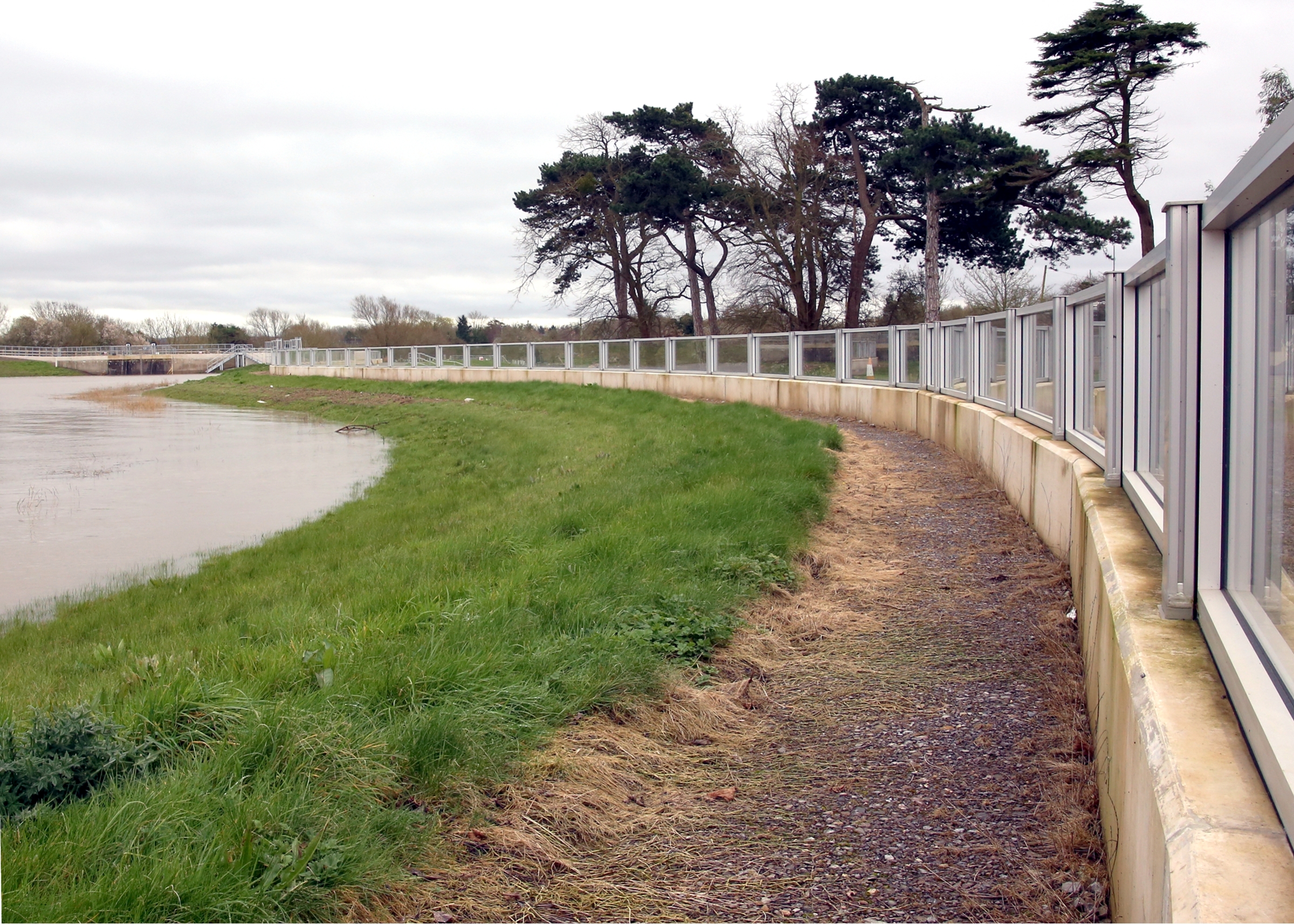
The Avonmouth Severnside Enterprise Area (ASEA) Ecology Mitigation and Flood Defence Project addressed both climate change risk and deteriorating assets across 17 km of estuary frontage. The defences include 5.9 km of raised earth embankments, 2.5 km of steel sheet-piled walls, 2.3 km of precast reinforced concrete walls and 0.6 km of in-situ reinforced concrete walls. Other works included strengthening and raising eight existing watercourse outfalls, installing five new flood gates, constructing 188 m of glass panel flood walls and planting 2 ha of native trees. Two new wetland areas were created as required habitat compensation to allow continued economic development without adversely affecting the Severn Estuary Special Area of Conservation.
The client partnership let the design and build contract to a joint venture of Bam Nuttall and Mott MacDonald in April 2019, with Arcadis acting as NEC project manager and WSP Binnies as NEC site supervisor. Despite the onset of the Covid-19 pandemic, the project was delivered on time and below the target cost. It won the Showcase, Resilience and People's Choice categories at the 2024 Institution of Civil Engineers Southwest Civil Engineering Awards.
Value engineering and collaborative planning under a target contract
Colin Taylor, Senior Flood and Coastal Risk Management Advisor at the Environment Agency, says NEC3 ECC Option C was selected for its flexibility and collaborative ethos, and that the target contract structure directly enabled the value engineering that kept the project below cost. Juraj Popovic, Commercial Manager at Mott MacDonald, explains how the shared incentive worked in practice. 'An example was construction of a 200 m long trial embankment to measure ground response, which cut fill by 5,000 m3 and saved £200,000 and 100,000 kg of carbon dioxide emissions. By proposing value engineering items we were able to reduce the cost by £3.3 million, benefiting both the client and contractor.'
Popovic says the NEC requirement for a robust, regularly revised programme - combined with weekly production calls and collaborative planning sessions - ensured programme control and agility throughout. 'Agile planning and wellbeing initiatives also ensured continuity during the Covid-19 pandemic, as most of the design was delivered while team members worked from home.' Lessons learned from the contract were captured through workshops and shared across the Environment Agency and local authorities to inform future projects. 'These lessons are now influencing best practice in flood defence design and being implemented on other similar infrastructure projects across the UK.'
By proposing value engineering items we were able to reduce the cost by £3.3 million, benefiting both the client and contractor. Agile planning and wellbeing initiatives also ensured continuity during the Covid-19 pandemic, as most of the design was delivered while team members worked from home.
Juraj Popovic, Commercial Manager, Mott MacDonald
Benefits of using NEC
- NEC3 ECC Option C's target contract structure gave client and contractor a shared incentive to identify and implement value engineering, reducing the outturn cost by £3.3 million below the target cost while delivering the full scope.
- NEC's requirement for a regularly revised programme, supported by weekly production calls and collaborative planning, maintained programme control across a complex, multi-worksite scheme throughout the Covid-19 pandemic.
The collaborative NEC framework enabled a three-organisation client partnership - the Environment Agency, South Gloucestershire Council and Bristol City Council - to procure and manage a complex £100 million scheme as a single coherent project.
Lessons learned captured through NEC contract workshops are now informing flood defence design and delivery best practice across the Environment Agency's wider programme of work in the UK.
- Contact
- Colin Taylor, Senior Flood & Coastal Risk Management Advisor, Environment Agency, Bristol, UK Tel: +44 370 850 6506 Juraj Popovic, Commercial Manager, Mott MacDonald, Bristol, UK, Tel: +44 117 403 9255
- colin.taylor@environment-agency.gov.uk, juraj.popovic@mottmac.com
- Web
- https://www.environment-agency.gov.uk, www.mottmac.com
- Share this page
-


- Copy link