NEC Users’ Group gold member the UK Atomic Energy Authority (UKAEA) is using a combination of NEC contracts to procure a state-of-the-art neutron source for its £200 million Lithium Breeding Tritium Innovation (LIBRTI) research programme at Culham in Oxfordshire, UK.
UKAEA is part of the British government’s Department of Energy Security and Net Zero (DESNZ) and has a mission to lead the delivery of sustainable fusion energy and maximise the scientific and economic benefits. It currently spends around £230 million a year on NEC-procured construction and maintenance work at its Culham campus.
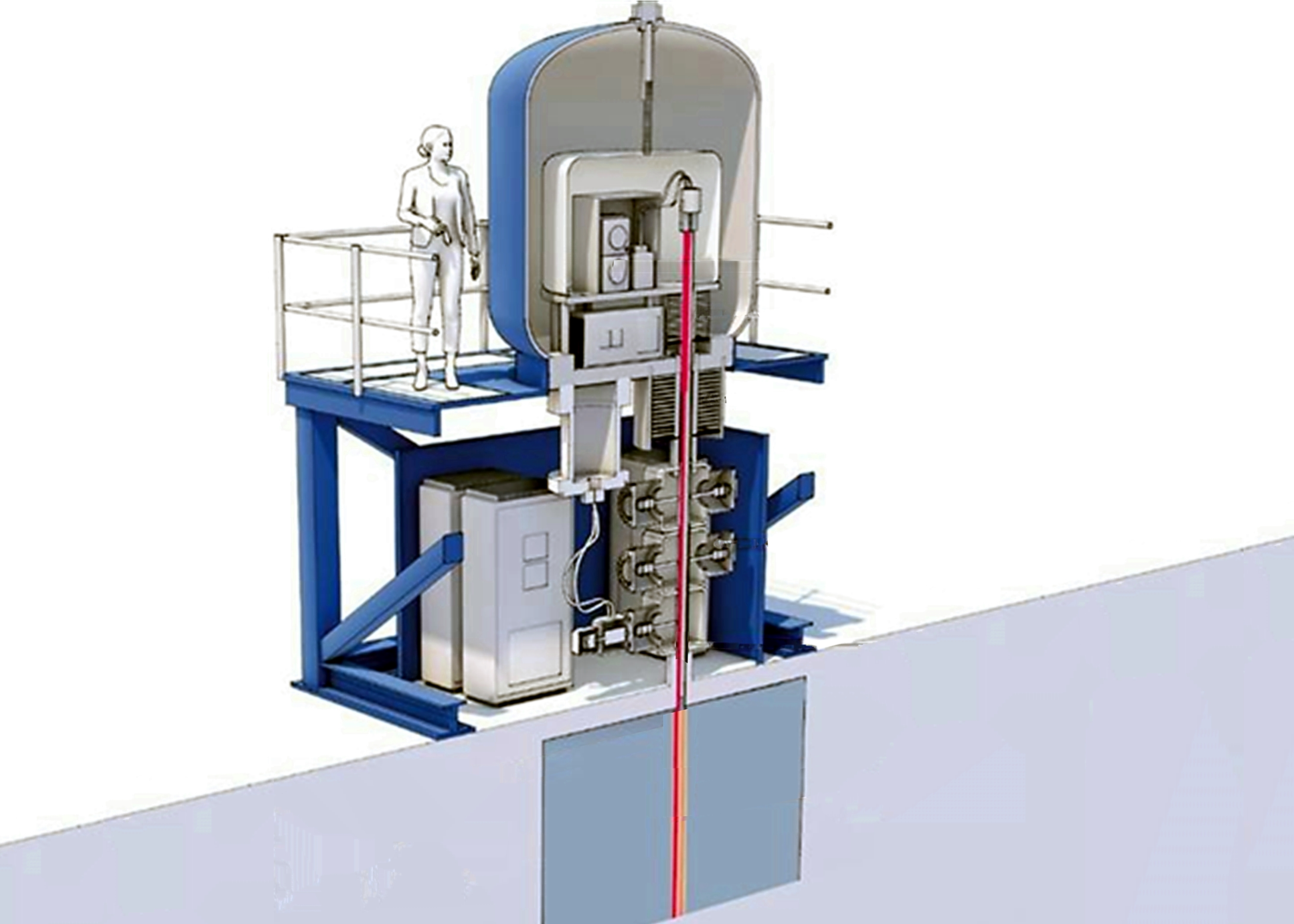 The 14 MeV neutron source is being designed, delivered, commissioned, developed and supported for 10 years by Shine Technologies of Wisconsin, USA under a £34.7 million NEC Framework Contract (FC) awarded in February 2025. The design, delivery and commissioning work is being carried out over 24 months under an NEC4 Engineering and Construction Contract (ECC) Option A (priced contract with activity schedule). The neutron source will be installed in an existing building which has been repurposed under a separate NEC4 ECC Option A.
A further 36 months of research and development work will then take place under an NEC4 Professional Service Contract (PSC) Option E (cost reimbursable contract), with the aim of increasing the flux of the neutron source from 109 n/cm2/s to 1013 n/cm2/s. In addition, Shine will provide maintenance and training for the neutron source for 10 years under an NEC4 Term Service Contract (TSC). The ECC and PSC were awarded in February 2025 and the TSC was signed in March 2025.
Once operational, the neutron source will provide a controllable supply of 14 MeV neutrons using a small-scale deuterium-tritium (DT) fusion process to test tritium breeding technology for full-scale DT fusion power plants. The energetic neutrons, which are a byproduct of DT fusion, can split lithium atoms to produce tritium, so building a lithium-based breeder blanket into fusion machines could enable a self-sustaining fuel cycle.
Flexibility and collaborative approach
Commercial lead Carl Evans says UKAEA conducted early market engagement with potential suppliers to evaluate procurement timelines, risk appetite, technical scope, contract type and pricing models. ‘This engagement confirmed that NEC’s flexibility and collaborative approach were well-suited to the complex, high-risk and technically demanding nature of the neutron source project.’
He says the decision to use NEC was motivated by several factors. ‘These included public-sector familiarity, collaborative risk management, clear governance and accountability, robust project management principles and flexibility for high-risk experimental work. Shine was happy to adopt NEC due to these factors.’
Evans says NEC is widely used across UK public-sector projects, ensuring alignment with existing frameworks, standards and expectations. ‘It also promotes proactive risk sharing between the client and supplier, which is crucial for highly experimental, technically complex projects such as tritium breeding and neutron source development.’
He says NEC’s structured processes provide transparent roles, responsibilities and decision-making mechanisms, supporting effective project oversight. ‘It encourages disciplined planning, progress monitoring and early issue resolution, helping mitigate delays and cost overruns in innovative, cutting-edge projects. NEC can also accommodate adaptations to scope and design changes, which are likely in a first-of-its-kind fusion technology testbed.’
Combination of contracts and options
Evans says to manage risk, incentivise delivery and accommodate experimental development, UKAEA structured the neutron source contracts using a combination of NEC4 contract options under an over-arching framework. ‘NEC4 ECC Option A was used for the baseline system supply with milestone-based payments and the contractor bearing the financial risk for delivering the known, mature technology.’
He says an NEC4 PSC Option E was then chosen for the research and development upgrade. ‘Designed for experimental technology with uncertain scope, this cost-reimbursable, open-book contract focuses on development to achieve the ultimate flux of 10¹³ n/cm²/s. It requires high client involvement and covers defined costs, fees, equipment rates and overheads, allowing flexibility for iterative development and unforeseen technical challenges.’
Finally, Evans says an NEC4 Term Service Contract provides for 10 years of maintenance and training, ensuring the long-term operability and knowledge transfer of the neutron source system. ‘As such, the use of NEC contracts enabled UKAEA to structure the project to manage high-risk, first-of-its-kind experimental development, incorporating collaborative risk-sharing with the contractor.
This combination of NEC options also ensures that UKAEA can progress safely from a fixed baseline system to cutting-edge experimental upgrades, while maintaining governance, flexibility, and robust risk management throughout the project lifecycle.’
Gold-tier project management
The neutron source contract has been classified as ‘gold-tier’ by the UK Cabinet Office Contract Tiering Tool. This reflects the contract’s value over £10 million, complex delivery requirements, long duration and potential for significant savings. The contractor is expected to deliver continuous innovation and development, requiring regular adjustments to scope, specifications and payment arrangements, with an open-book upgrade pathway.
To manage the contract effectively, UKAEA has appointed Mark Perman as the dedicated NEC project manager. Accredited as an ‘expert’ by the Government Commercial Function’s contract management capability programme, he is supported by a team of UKAEA subject-matter experts including contract manager lead Alfy Nsamba, who provides embedded quantity surveying support for financial oversight. Together they help to ensure that day-to-day contract management aligns with NEC4 principles, maintains supplier performance and secures value for money, efficiency and delivery of outcomes in line with UK government expectations.
A comprehensive contract management plan supports the project manager and wider team, defining processes for performance management, stakeholder communication, risk management, change control and mobilisation. During contract mobilisation, UKAEA worked closely with Shine to address service delivery gaps and incorporate lessons learned from stakeholder engagement. The contract management plan has been recognised as a best practice example by the Government Commercial Function for its detailed approach to applying NEC4 conditions, reinforcing high-quality, innovative contract delivery under the NEC framework.
Evans says the neutron source project will be supported by the CEMAR contract management system. ‘This will provide a centralised platform for tracking milestones, managing risks, recording contract variations and generating auditable reports, ensuring that NEC’s principles of governance, flexibility, and collaborative risk management are fully applied throughout the project lifecycle.’
He adds, ‘As the programme progresses, it is highly likely UKAEA will continue to use the NEC form of contract to support the project’s technical, operational and experimental needs.’
Benefits of using NEC
- NEC’s flexibility and collaborative approach is well-suited to the complex, high-risk and technically demanding nature of the neutron source project.
- NEC promotes proactive risk sharing between client and supplier, which is crucial for this highly experimental, technically complex project.
- NEC’s range of contracts and options provided optimum procurement solutions for baseline system supply, research and development, and long-term maintenance within an overarching framework.
- NEC’s structured processes provide transparent roles, responsibilities and decision-making mechanisms, supporting effective project oversight.
Author: Simon Fullalove
- Contact
- Carl Evans, Commercial Lead, UK Atomic Energy Authority, Culham Campus, Abingdon, Oxfordshire, UK
- carl.evans@ukaea.uk
- Web
- https://www.ukaea.org
- Share this page
-


- Copy link