-Paul-Carstairs.jpg?width=1600)
50 Fenchurch Street (c) Paul Carstairs

Celia Smith
Over the last three decades, collaboration has moved from being a desirable aspiration in construction projects to an explicit objective. NEC was designed to support collaboration, but outcomes depend on behaviours, capability, leadership, and incentives - not contract wording alone.
Key Points:
- Collaboration emerged in response to poor outcomes from adversarial contracting, not as a soft cultural aspiration.
- Trust and commercial clarity are inseparable; both must be present to deliver mutually beneficial outcomes for clients and supply chains.
- NEC was designed to support collaboration, but outcomes depend on behaviours, capability, leadership, and incentives - not contract wording alone.
- Because construction is inherently uncertain, collaboration is best understood as disciplined, collective adaptability.
Why collaboration became an explicit objective
Over the last three decades, collaboration has moved from being a desirable aspiration in construction projects to an explicit objective. The shift has its roots in the UK Government’s recognition during the 1990s that adversarial contracting practices were contributing to poor outcomes across the industry - manifesting in disputes, inefficiency, cost overruns, and fractured relationships.
Sir Michael Latham’s report, Constructing the Team, articulated a clear challenge: to move away from entrenched adversarial behaviours towards relationships founded on openness, mutual benefit, and shared goals. Latham originally titled the interim consultation draft Trust and Money, signalling a practical insight that still holds – that collaboration depends on both trust and commercial reality, equally and inseparably.
Against this backdrop, the NEC suite of contracts was developed with a similar ambition. NEC set out to provide a contract form that was different in tone and operation: written in plain language and structured around proactive project management processes. NEC encourages early engagement with risk, transparency in decision‑making and a disciplined, time‑bound approach to managing change.
In practice, however, mechanisms that can support collaboration do not guarantee collaborative outcomes. Results still depend on behaviours, leadership, capability, and aligned incentives. Where these are not well aligned with the aspirations of the NEC, or where the form is heavily amended, the intent of the contract can be diluted, and familiar adversarial patterns can quickly re‑emerge.
One reason is that construction is inherently uncertain. There will always be things that were not expected that need to be resolved (and paid for) as they arise. It is natural that in these instances, there is a tendency to look to apportion responsibility and cost to cover resolution. In that context, operating collaboratively can feel uncomfortable - particularly when commercial pressures push parties towards defensive positions.
NEC contracts were designed to support collaboration in practice, but whether that intent is realised depends on far more than contract choice alone. Outcomes are shaped by behaviours, capability, leadership, and the wider commercial and governance environment in which the contract operates. Understanding how these factors interact is critical to achieving the benefits collaboration is often assumed to deliver.
-Adam-Grzesik.jpg?language=en "02 Arup Office - Warsaw_(c) Adam Grzesik") Arup Office – Warsaw (c) Adam Grzesik
Arup Office – Warsaw (c) Adam Grzesik
NEC contracts as a tool for collaboration
NEC contracts are often described as project management tools ‘dressed up as contracts’. Instead of relying on dense drafting and retrospective dispute resolution, NEC structures delivery around defined processes, responsibilities and timeframes intended for day‑to‑day use by project teams.
Early warning is designed to surface issues as soon as they are foreseeable. Used well, early warnings act as structured conversation starters: they create space for joint problem‑solving before positions harden or costs escalate.
Programme creates shared visibility of progress, risks, and upcoming work. Where used as intended, it becomes the project’s ‘heartbeat’: a working tool for alignment rather than a battleground for entitlement.
Compensation events require timely notification and prospective assessment of change. In principle, this supports fairness and commercial clarity by resolving issues while they are still manageable, rather than stockpiling them for end‑of‑project disputes.
When these mechanisms are applied consistently, they can reduce the frequency and intensity of formal disputes. But the presence of the mechanisms is not enough on its own. How teams perceive and use them, and the commercial context in which they operate, largely determines whether NEC behaves as a collaboration enabler or just another contract form.
Taken together, these processes are designed to make risk and change visible early and manageable in real time, but only where teams actively choose to use them collaboratively.
The central role of behaviours
NEC provides a framework for collaboration, but behaviours remain the decisive factor. The same mechanisms that can support collaboration can also be used defensively if the underlying mindset is adversarial.
For example, early warnings can be treated as precursors to claims rather than opportunities for shared risk management. Programme submissions can become compliance exercises rather than genuine tools for alignment. When that happens, teams may still be ‘doing NEC’, but the benefits associated with collaboration are unlikely to follow.
A recurring challenge is modification of the NEC contract itself. Clients often introduce bespoke clauses or additional conditions to manage perceived risk or provide greater certainty in contractor costs. Some project‑specific amendments are justified, for example to reflect the nature of the project or client governance. Extensive or poorly considered changes can undermine the balance of the contract and erode its collaborative intent, sometimes reinforcing the very behaviours NEC was designed to move away from.
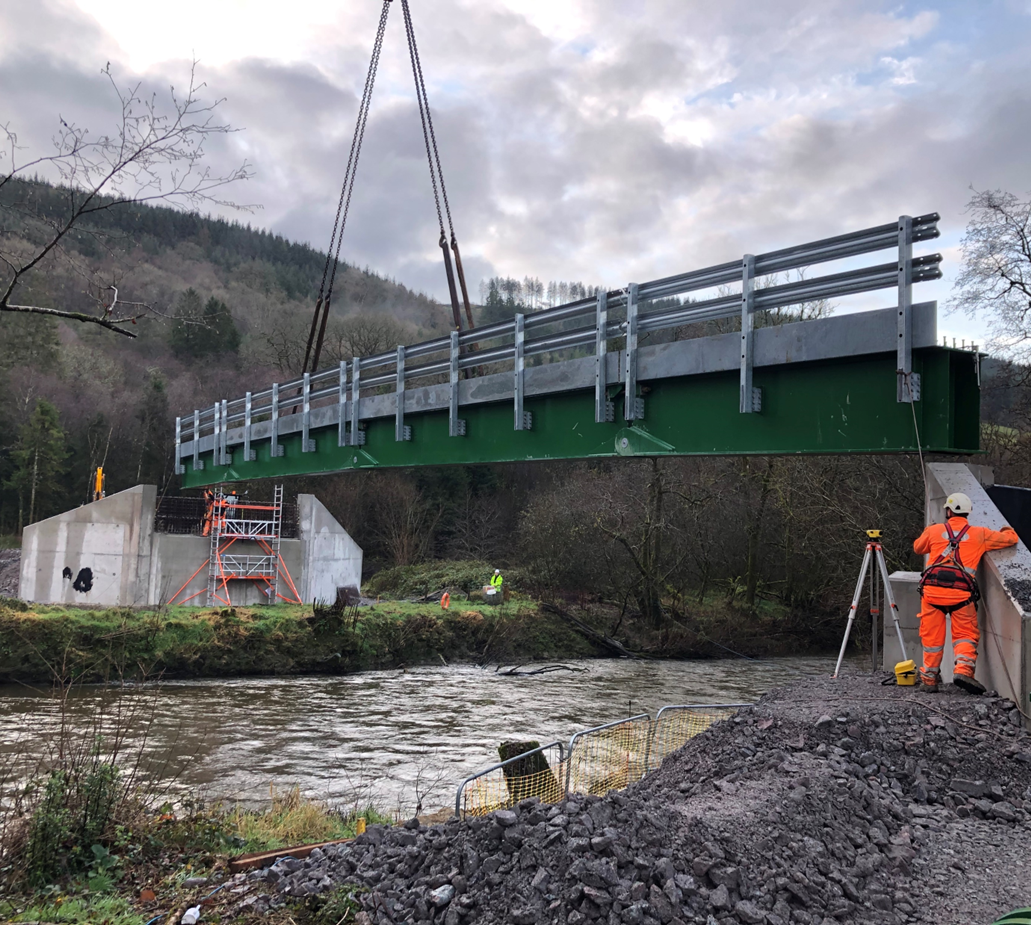
Graig Bridge Project
Collaboration and the management of uncertainty
A common misconception is that collaborative contracting is meant to eliminate uncertainty or create a culture of ‘no surprises’. As mentioned above, construction projects are inherently uncertain: they involve complex physical conditions, interdependent activities, evolving stakeholder requirements and external constraints that cannot all be predicted at the outset. There will always be a need for clients and contractors to make some contingency provision for the cost and time associated with dealing with change throughout the duration of a contract.
Attempting to avoid uncertainty often drives defensive behaviours and the transfer of risk to parties least able to manage it. A more productive collaborative mindset recognises uncertainty as unavoidable and focuses on how it is managed. NEC supports this by surfacing issues early, creating shared visibility of emerging risks and requiring timely, structured responses. Early warnings, programme updates, and prospective assessment of change are not about eliminating risk; they are about addressing uncertainty openly before it hardens into claims, disputes or loss of trust.
Capability is critical. NEC demands skill and professionalism from those administering it. Where project managers, supervisors or commercial teams lack familiarity with NEC processes, or are under pressure to revert to traditional, adversarial approaches, the contract’s potential benefits can be lost. This helps explain the gap often seen between how NEC is intended to operate and how it is implemented on live projects.
Behaviours are also shaped early. The client’s procurement approach, the tone of tender documentation, and the messages conveyed during mobilisation influence how parties interact throughout the project. Where collaboration is framed as a genuine objective, supported by aligned incentives and consistent behaviours, NEC’s mechanisms are more likely to deliver their intended benefits.
High‑performing NEC teams tend to exhibit consistent habits: early warnings are raised routinely and without blame; programme updates are used as working tools rather than contractual artefacts; and commercial discussions focus on options and impacts rather than entitlement. These behaviours reinforce one another and are strongest where roles, responsibilities and risk ownership are understood across the client, adviser, and supply chain.
-Paul-Carstairs.jpg?language=en "02 Arup_1 Triton Square_(c) Paul Carstairs")
1 Triton Square (c) Paul Carstairs
The benefits of collaboration in practice
When collaboration is genuinely embedded, the benefits can be significant. Open communication supports trust‑building, which in turn accelerates decision‑making and problem‑solving. Improved transparency enables risks to be identified and addressed earlier, reducing the likelihood of delay and dispute.
Conversely, adversarial approaches carry significant hidden costs for clients, advisers, and contractors alike, including duplicated analysis, prolonged commercial negotiation, legal fees, and management time absorbed by dispute avoidance, rather than project delivery.
Collaboration also has clear commercial advantages. Early engagement with change allows costs to be understood and managed more effectively, reducing uncertainty for both clients and contractors. Where risk is allocated to parties unable to manage it, it is still paid for - through higher tender prices, increased claims, or reduced quality as contractors seek to recover cost and margin.
Collaborative approaches can also support longer‑term relationships across programmes of work, but the benefits vary with client maturity for these types of projects. For clients that deliver construction infrequently, collaboration can unlock delivery insight through early contractor involvement. For clients who have mature construction delivery experience, continuity allows relationships to mature over time, supporting predictability and performance as teams move more quickly through the ‘forming’ and ‘storming’ stages into ‘performing’.
Collaboration should not be romanticised. All parties remain commercial entities with legitimate objectives around profit, value, and risk. Collaboration does not remove these realities; it provides a framework for managing them more constructively so that disagreements are handled earlier, with better information and less escalation.
-Daniel-Weiss.jpg?language=en "02 Arup_Pyrmont Bridge Site Visit_(c) Daniel Weiss")
Pyrmont Bridge Site Visit (c) Daniel Weiss
Case Study: Natural Resources Wales Next Generation Framework
Under Natural Resources Wales’ Next Generation Framework (NGF), NEC was used as part of a broader strategy to embed collaboration through continuity and early engagement, rather than relying on contract form alone. Contractors were appointed to a four‑year framework and allocated work directly, allowing teams to remain consistent across projects and relationships to mature over time.
A key decision was to involve contractors early in shaping scope and developing target costs, particularly where ground conditions and environmental constraints created unavoidable uncertainty. Contractors were paid on Defined Cost during target development, reducing incentives to include large risk allowances and encouraging open discussion of assumptions. NEC Engineering and Construction Contract (ECC) Option C was deliberately selected to support this approach, aligning commercial outcomes through pain‑gain share rather than fixed‑price risk transfer.
The impact of this approach became more pronounced over time. Early projects understandably carried more cautious pricing where risks were less well understood. As teams gained experience across multiple schemes, those risks became clearer, target costs more robust and contingency allowances reduced. Importantly, this improvement did not arise from increased certainty at the outset, but from shared learning and consistent application of NEC processes.
When issues arose during delivery, they were addressed early through the early warning and compensation event mechanisms, assessed using Defined Cost rather than becoming retrospective disputes. The lesson from the NGF is that NEC enables collaboration most effectively where it removes the need for defensive risk pricing and is combined with continuity, trust and informed client decision‑making.
Maximising collaboration through NEC contracts
Collaboration does not emerge automatically from contract choice alone. To maximise the collaborative potential of NEC contracts, several interdependent conditions need to be in place across procurement, governance, behaviours, and capability.
1) Client clarity and aligned procurement. Clients set the tone, but not by maximising collaboration in all circumstances - by being clear about the level of collaboration they are seeking and the implications of that choice. Procurement strategy should then be aligned accordingly. Problems most often arise where expectations about collaboration are high, but the commercial arrangements restrict proper sharing of risk and cost which then drives defensive behaviours.
2) Adviser support and capability. Advisers and procurement consultants can help clients understand the impact of contract amendments, advise on workable risk allocation and support capability development across project teams. Without that support, clients may unintentionally dilute NEC’s operating model while believing they have simply ‘tightened’ the contract, or by not matching the contracts mechanisms to their internal governance or their team’s typical management approaches.
3) Behaviour expectations. Expectations around behaviours should be aligned early and revisited throughout delivery. Project charters, behaviour workshops, and periodic health checks can help maintain focus on collaborative objectives, particularly as teams change over time, or during difficult periods where relationships are challenged.
4) A coherent delivery ecosystem. NEC is one tool within a wider delivery ecosystem. The choice to use NEC contracts should be aligned with a client’s governance arrangements, commercial models, and digital systems. Where these are coherent and mutually reinforcing, the conditions for collaboration, and its resulting benefits, are significantly strengthened.
Collaboration is not a soft aspiration. When properly embedded, it delivers tangible benefits in time, cost, risk, and relationships. NEC can be a powerful enabler, but only when supported by the right behaviours, leadership, and commercial clarity.
In doing so, it creates the conditions in which trust can develop as a rational response to consistent and fair commercial behaviour. Collaboration, as Latham recognised, is neither sentimental nor abstract. It is built where trust and money are addressed together - with clarity, discipline, and intent.
- Author
- Celia Smith, Associate Director, Arup
- Share this page
-


- Copy link